Au-some Teacher SVG: A Designer’s Embroidery Review
As a designer who spends half my life digitizing files and the other half stitching them out, I have learned to be skeptical of generic T-Shirt Designs. We see thousands of teacher-themed graphics flood the market every August, but few hold up under the needle. When I first pulled the Au-some Teacher SVG Design into my workspace, I was not looking for hype. I was looking for structural integrity, visual balance, and commercial viability. This review breaks down how this specific set of Graphics performs when translated from a digital vector into a tangible, stitched reality.
First Impressions: Visual Balance and Mood
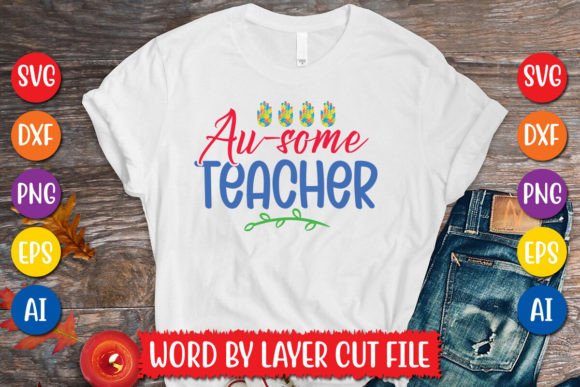
The immediate appeal of the Au-some Teacher SVG Design lies in its clever typographic play. By swapping "Awesome" with "Au-some," it taps into the science-teacher niche or the general appreciation for STEM education without being overly cluttered. From a layout perspective, the design feels compact yet breathable. For embroidery, this is crucial. Overly wide designs distort on curved surfaces like sweatshirt chests, while overly dense designs puckers thin fabrics.
The mood here is playful but professional. It avoids the childish clip-art aesthetic that often plagues educational merchandise, making it suitable for high school teachers, university professors, or science department staff. When I visualize this as a machine embroidery design, I see clean lines that should translate well into satin stitches for the text and potentially fill stitches for any accompanying atomic or science-themed icons, depending on the specific variation within the file set.
Real-World Application: The Custom Tote Bag Test
To truly evaluate a design, you must imagine it on a product. I recently worked on a batch of custom canvas tote bags for a local school’s end-of-year gift exchange. This is where the Au-some Teacher SVG Design shines. Canvas is a forgiving medium with a tight weave, providing an excellent foundation for embroidery.
I imagined placing this design centered on the front of a natural-colored cotton tote. The contrast between bright thread colors—perhaps a vibrant blue or teal for the "Au" element and a neutral grey or black for the rest—would pop against the fabric. Because the design is likely composed of distinct layers, as suggested by the "WORD BY LAYER SVG FILES" description, it allows for precise color blocking. This layering is essential for creating depth without excessive stitch count. A lower stitch density means less pull on the fabric, reducing the risk of the tote bag warping after washing.
For an Etsy seller or small shop product creator, this versatility is key. The same design could easily transition from a tote bag to a sturdy apron for a chemistry lab or art room. The durability of the stitched product directly impacts customer trust. If the design holds up after multiple washes, your brand reputation grows. If it bunches or threads snap, you lose a repeat customer.
Navigating Fabric Challenges and Hoop Sizes
While the design is strong, it is not without its constraints. Embroidery is physics, not just pixels. When working with the Au-some Teacher SVG Design, you must consider the hoop size relative to the garment. For a standard left-chest placement on a polo shirt or a sweatshirt embroidery project, ensure the design fits within a 4x4 inch hoop if you are using smaller machines. If the design includes intricate atomic details, check the scale. Tiny details can get lost in the texture of terry cloth towels or fuzzy fleece.
Textured fabrics present another challenge. If you are stitching this onto a waffle-knit thermal or a ribbed cap, the uneven surface can distort fine lines. In these cases, I recommend using a cut-away stabilizer rather than a tear-away. Cut-away stabilizers provide ongoing support, preventing the design from sinking into the fabric texture over time. For stretchy fabrics like performance tees, a lightweight fusible interfacing beneath the stabilizer can prevent registration issues during stitching.
Dark fabrics require special attention to thread choice. If you are stitching on navy or black, you cannot rely on shadow effects. You need high-contrast thread colors. The "Au" element offers a perfect opportunity for metallic or neon threads, which catch the light and add a premium feel to the finished product. However, always test your tension settings. Metallic threads are prone to breaking if the tension is too tight or the needle eye is too small.
Commercial Viability for Craft Businesses
For craft business owners and digital product sellers, the licensing and file structure are paramount. The product description notes that you receive "WORD BY LAYER SVG FILES" and an Adobe Illustrator (.ai) file. This is a significant advantage. Layered SVGs allow you to isolate elements for heat transfer vinyl (HTV) if you offer hybrid products, or to simplify the design for smaller embroidery hoops by removing non-essential decorative elements.
However, a critical note for commercial embroidery: SVG files are vector graphics, not embroidery files. You cannot load an SVG directly into most embroidery machines. You must use digitizing software to convert these vectors into stitch files (such as PES, DST, or EXP). If you are not a digitizer, you will need to hire one or use auto-digitizing features with caution. Auto-digitizing often creates inefficient paths and excessive jump stitches. For a professional embroidered patch or high-end apparel, manual digitizing ensures proper underlay, correct stitch angles, and optimal stitch density.
If you are selling the digital embroidery file itself, ensure you have the rights to distribute the digitized version. The purchase of the SVG grants you the graphic asset, but selling the digitized stitch file may require additional commercial licenses. Always verify the terms before listing on platforms like Etsy or Creative Market.
Practical Designer Notes for Best Results
Before committing to a full production run, follow these steps to ensure quality:
- Test on Scrap Fabric: Always stitch out a sample on the exact fabric type you intend to use. Check for puckering, thread breaks, and registration accuracy.
- Check Thread Contrast: View your design in grayscale. If the elements blend together, adjust your thread palette to ensure readability from a distance.
- Review Stitch Density: If you digitize this yourself, keep the density moderate. High density on lightweight fabrics causes stiffness and discomfort for the wearer.
- Inspect Small Details: Zoom in on the "Au" symbol. Ensure curves are smooth and not jagged. Jagged edges in vectors translate to messy stitches.
- Mockup Verification: Create printable mockup images showing the design on various items like tote bag design layouts, mugs, and shirts. This helps customers visualize the personalized gift potential.
- Confirm Licensing: Double-check the license included with the zip file. Can you sell physical items made with this design? Can you use it in logo branding? Clarity here prevents legal headaches later.
Final Verdict on the Au-some Teacher SVG
The Au-some Teacher SVG Design is a robust asset for designers who understand the bridge between vector art and textile application. It is not just a cute graphic; it is a versatile component for custom apparel, holiday embroidery gifts, and baby embroidery projects for educator families. Its strength lies in its simplicity and thematic relevance. By respecting the technical limitations of embroidery—such as fabric texture, hoop size, and stitch density—you can transform this digital download into a high-value physical product. Whether you are creating a boutique line of teacher appreciation gifts or stocking your online store with unique design assets, this design offers the flexibility and charm needed to engage buyers and build a reputable brand.